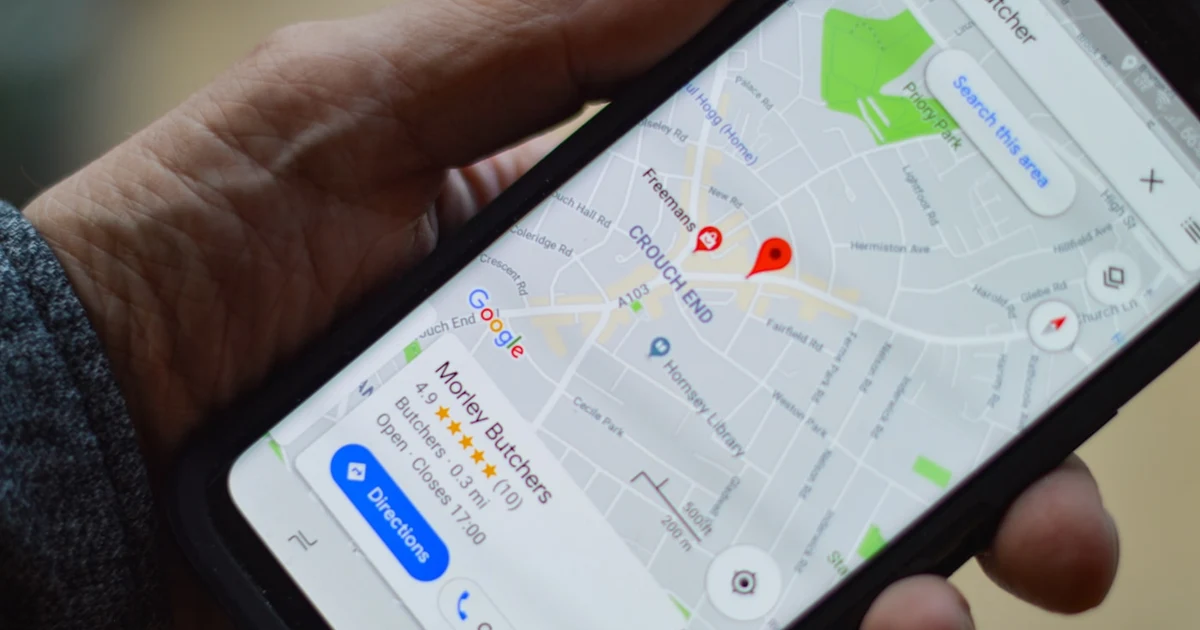
When someone searches «dental clinic near me» or «physiotherapist Granada», Google shows a map with three highlighted results before any website. That block, the «local pack», takes most of the clicks. Ranking among the first in Google Maps is not a matter of luck or seniority: it is the result of optimising a set of specific factors that Google has documented and that most clinics ignore.
In this guide I explain how Google decides who makes that top 3 and what you have to do, step by step, so your clinic becomes one of the three.
How Google decides who makes the top 3
Google orders local results combining three official factors: relevance, distance and prominence. Understanding them saves you months of guessing in the dark.
- Relevance. How well your listing matches the search. Category, detailed services and description rule here. An incomplete listing cannot be relevant.
- Distance. How close you are to the person searching. You cannot change it, but you can compensate for it: a strong listing appears in searches across the whole city, not just your neighbourhood.
- Prominence. How well known Google considers your clinic: reviews, mentions on other websites, links and the ranking of your own website. It is the factor where you can gain the most ground.
The most common misconception
Many clinics treat the Google listing as paperwork you fill in once. Google rewards activity: new photos, recent answered reviews, updated services and posts. A living listing climbs; a parked one sinks even if it used to be good.
Optimise your listing step by step
If you start from a basic listing, this is the order of work that delivers the most results:
- Exact primary category. «Dental clinic», «Physical therapist», «Aesthetic medicine clinic»... never something generic like «Doctor» or «Health centre». Add secondary categories for the rest of your services.
- Every service, with a description. Google lets you list each treatment with its own text. Every detailed service is one more entry door in searches.
- Real opening hours, including holidays. A listing that says «open» when you are closed generates negative reviews and loses the algorithm’s trust.
- Real photos every month. Front, reception, rooms and team. Listings with recent photos get more clicks and more direction requests, two signals Google measures.
- Attributes and questions. Accessibility, online booking, payment methods... and answer the questions and answers section yourself before a stranger fills it in.
If you have not created or verified your listing yet, start with the complete Google My Business guide for businesses in Granada and come back to this one for the clinic-specific part.
Reviews: the factor that moves the map the most
Annual local ranking factor studies, like the one from Whitespark, place reviews among the heaviest signals of the local pack. But it does not work the way most people think: the winner is not whoever has the most reviews, but whoever keeps a constant flow of recent reviews, with text that mentions treatments, and with answers from the business.
Three details that make the difference for clinics:
- Cadence over volume. Four new reviews a month for a year weigh more than fifty gathered in a one-off campaign.
- Keywords inside the review. When a patient writes «they treated my pelvic floor brilliantly», that review ranks your listing for that search. You get it by asking for the review right when the treatment ends, while the patient remembers what you did.
- Answer all of them, good and bad. The answer is public: you write it for the next patient who is deciding, not for the one who already gave their opinion.
Beware of shortcuts: buying reviews or incentivising them with discounts violates Google policies and can mean the removal of all your reviews or the suspension of the listing. In the guide on how to get reviews for your clinic without breaking any rules you have the complete legal system.
Your website also pushes your listing
Prominence does not live only in Maps: Google crosses your listing with your website. A fast website, with one page per treatment and contact details identical to the listing, makes the listing climb. The equation works like this:
- NAP consistency. Name, address and phone written exactly the same on the website, the listing and directories. A dance of numbers or an old unupdated location confuses the algorithm.
- A linked page per treatment. If your listing offers «teeth whitening» and your website has a specific whitening page, relevance multiplies in both directions.
- Speed and experience. Google measures what happens when someone jumps from the listing to your website. If the site is slow and the user goes back, that negative signal affects the whole. The websites I build score 100/100 in Lighthouse precisely because of this: every tenth of a second counts for rankings and for not losing the patient.
Listing without website or website without listing: neither wins alone
The listing captures the search and the website turns it into an appointment. A clinic with an optimised listing but a slow website loses the patient at the last step; an excellent website without a worked listing never even gets the visit. The complete system is what fills schedules.
Behavioural signals: what users do with your listing
There is a group of factors almost nobody talks about because you do not configure it, you earn it: what users do when they see your listing. Google measures how many people click your result instead of the one next to it, how many call from the listing button, how many request directions and how many visit the website. Each of those actions is a vote of confidence the algorithm counts.
This explains why listings with real professional photos and well-answered reviews climb steadily: it is not just the direct signal, it is that they generate more clicks and more calls than the competition, and that behaviour feeds back into the ranking. That is why apparently cosmetic details matter so much:
- The cover photo decides the first click. It is the first thing shown in the list. A clear storefront or a bright reception beats a pixelated logo.
- The first visible review sells or scares. Google highlights review snippets next to the listing; a constant flow of recent positive reviews improves that showcase.
- The booking button removes friction. If you connect online booking to the listing, the patient books without even visiting the website, and that interaction also scores.
Mistakes that sink you in the map
What you stop doing matters as much as what you do:
- Stuffing keywords into the listing name. «Smile Clinic - Dentist Implants Granada» violates the guidelines. Google can suspend the listing, and competitors can report it.
- Bought or incentivised reviews. Automatic filters detect them better every year, and the penalty takes the legitimate ones down too.
- Duplicate listings. Two listings of the same clinic cannibalise each other and split reviews. They must be merged, not left competing.
- Generic category. «Medical centre» makes you invisible for searches of your real specialty.
- Ignoring questions and answers. Anyone can answer for you, including false information that scares patients away.
Frequently asked questions about Google Maps for clinics
How long does it take for a clinic to climb positions in Google Maps?
With a well-optimised listing and a constant flow of reviews, movements show in four to eight weeks for specialty searches. Reaching the top 3 in competitive searches like «dentist Granada» can take four to eight months, depending on how hard the clinics already there are working.
Can I appear in Google Maps without a website?
Yes, the listing can exist without a website. But you compete at a disadvantage: the website adds relevance, prominence and, above all, turns the visit into an appointment. Without a website, the patient can only call you during clinic hours, and Google has fewer signals to trust your business over competitors who do have one.
Why does my competitor rank first with worse reviews?
Because the average rating is just one signal among dozens. A clinic with 4.6 and recent reviews, exact category, an active listing and a fast website beats another with a 4.9 that has been frozen for a year. Look at their full listing: you will almost always find detailed services, new photos and an answer to every review.
Does putting keywords in the listing name work?
It works short term, which is why you see it so much, but it violates Google guidelines. The listing name must be the real business name. If you get reported or a filter catches it, the listing can be suspended and you lose reviews, positions and calls overnight. The risk is not worth it.
What do I do about a fake or unfair review?
First answer it calmly and with facts, because future patients read the answer. Then flag it for review from your listing stating which policy it breaks. Google does not remove reviews for being negative, only for violating its rules: spam, conflict of interest, provably false content. A constant flow of real reviews dilutes it quickly.
The map is half of the local ranking equation: the other half is also appearing in the classic web results. You have the complete approach in the guide on local SEO in Granada for businesses.
🚀 Want to know what your business actually needs?
I'll give you a free, no-commitment consultation. No pressure, no selling you things you don't need. Write to me here →