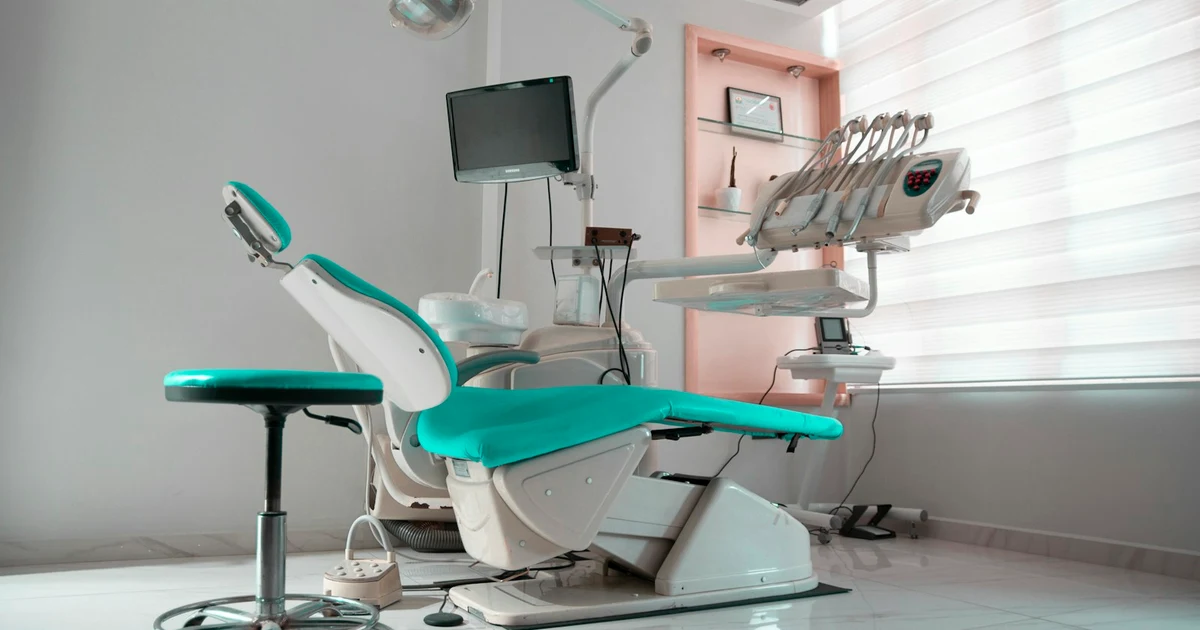
A patient looking into implants or clear aligners is not comparing prices for a routine cleaning: they are deciding who to trust with their mouth, their face, and several thousand dollars. Before ever walking into the clinic, they already formed an opinion from your website. Premium dental website design is not a cosmetic indulgence: it is the first trust filter deciding whether they pick up the phone or close the tab.
Here I walk through, with real data, what separates a dental site that informs from one that sells the outcome, and why in high-ticket practices premium design is not an expense: it is the conversion lever with the highest return.
The template that works perfectly and still kills your premium positioning
There is a mistake almost every high-value dental practice makes at some point: confusing "the website works" with "the website sells." A well-configured template can load fast, look fine on mobile, and have a functioning contact form. Technically, nothing is broken. And yet it can scare off the exact patient who was ready to spend $6,000 on clear aligner treatment.
The reason is simple: that patient is not evaluating functionality, they are evaluating trust. And trust gets decided in milliseconds, long before anyone reads a single word of copy. The Stanford Web Credibility Project, after studying more than 4,500 people, found that 46.1% of users judge a site's credibility mostly on visual appeal (layout, typography, color scheme) rather than on the actual content the site offers.
Applied to a high-end dental practice, this means a generic template with stock photos of models who have never set foot in your clinic, and icons identical to a thousand other practices, sends the wrong message: "we are just another clinic." And if your actual value proposition is the opposite (personalized care, cutting-edge technology, superior aesthetic outcomes), your own website is working against you before the patient ever picks up the phone.
This gap is easy to miss from the inside, because the practice owner already trusts the team, already knows the technology is current, already knows the results are good. The website is the only place where a stranger has to reach those same conclusions in seconds, with no prior relationship to lean on. Typical mistakes that keep showing up on websites of clinics with excellent teams and generic design:
- Stock photography of models who have nothing to do with the real practice
- Default theme fonts with zero personality
- Cramped spacing that piles up text, icons and buttons with no visual hierarchy
- Long, cold contact forms with no context or warmth
- No real case studies at all, just paragraphs describing services
- Saturated clinical-blue color palettes with no warmth whatsoever
The number that changes how you think about this
Almost half of all users decide whether to trust a website based purely on visual appearance, before reading a single line. For a dental practice, that visual impression stands in for reputation, credentials, and real team experience during those first seconds.
Ask yourself something simple: if a patient rules out your clinic in the first few seconds because of a weak visual impression, what is that lost patient worth? A single implant case can be worth more than the entire cost of redesigning the site. That is the imbalance almost no practice ever calculates: generic design is not free, its cost is just hidden inside the patients who never book a consultation.
The 50 milliseconds that decide whether a patient trusts your clinic
The Nielsen Norman Group has documented that users form an aesthetic first impression of a website in about 50 milliseconds, and that initial reaction then shapes how they perceive relevance, credibility, and usability for everything that follows. Fifty milliseconds is not enough time to read anything. It is only enough time to see.
Here is what a patient sees, processes and feels before reading a single word, and the specific design elements that separate trust from doubt:
Careful typography and generous spacing
A typeface with actual personality (not the theme default) and enough white space between sections communicate, without saying it outright, that someone cared about every detail. It is the same principle a physical clinic applies: a tidy, well-lit waiting room feels more trustworthy than one stacked with leaflets, even with the same dentist behind both doors.
Real photography of the clinic and the team
Replacing stock imagery with real photography (the operatory, the team by name, the reception desk) is probably the single change with the highest trust impact per dollar spent. NN/g explicitly notes that combining original photography with images of real people (staff, facilities, patients) builds more trust than relying on stock imagery alone, according to its research on communicating trustworthiness in web design.
Before/after with real cases
In cosmetic dentistry, the outcome is the product. A before/after gallery built with patient consent, properly shot with matching framing on both photos, does in ten seconds what a paragraph of copy cannot do in ten lines: it demonstrates the result instead of promising it.
Testimonials with a name and a specific treatment
"Great clinic, highly recommend" convinces no one. "Sarah, 34, six months of Invisalign, corrected crossbite" does. Specificity is what separates a generic testimonial from real social proof, because it describes a case a prospective patient can actually see themselves in.
Subtle microanimations
A smooth scroll transition, a button that responds with a slight shift on hover, images that load progressively instead of popping in: these are details a patient never consciously notices, but that their brain reads as care and quality. The key is restraint — if they distract or slow the site down, they subtract more value than they add.
A trust bar with certifications and technology
A visible strip showing professional accreditations, the specific technology the clinic uses (intraoral scanner, implant system, aligner brand) and the team's years of experience works as a mental shortcut: the patient does not have to research on their own whether the clinic measures up, the site confirms it at a glance. It is a small element, usually a single row near the header or footer, but it does a disproportionate amount of trust-building work for how little space it takes.
An informational page versus a page that sells the outcome
Most dental websites are built to inform: what services the practice offers, what hours it keeps, where it is located. That is necessary information, but it is not what turns a visitor into a patient for a $6,000 treatment. A page that sells the outcome does something different: it puts the prospective patient in a position to picture themselves already holding the result.
The practical difference between the two approaches:
- Informational page: a list of services with one generic paragraph each, no hierarchy or focus
- Outcome-selling page: one featured treatment (clear aligners, for instance) with its own journey: problem, before/after, process, testimonial, call to action
- Informational page: a single generic contact form at the bottom of the site
- Outcome-selling page: treatment-specific calls to action, like "Book your free Invisalign consultation"
- Informational page: copy centered on the clinical procedure itself
- Outcome-selling page: copy centered on the patient's life after treatment: smiling in photos, eating without pain, speaking with confidence
This distinction matters most for slow-decision, high-commitment treatments like implants or full smile rehabilitation. A patient does not decide on their first visit to the website: they come back several times, compare clinics, show the site to their partner. The more times they revisit it, the more weight each of those visits carries in reinforcing the same feeling of safety and outcome.
Picture two clinics with the same team, the same technology, and similar prices. The one that structures its site around outcomes (a dedicated landing page for implants, another for clear aligners, each with its own visual journey and its own call to action) captures the undecided patient the other clinic loses along the way, simply because it was easier to picture the end result.
The real ROI of premium design when the average ticket is high
This is where design stops being a matter of taste and becomes a matter of math. A full course of Invisalign treatment typically costs between $1,800 and $9,500 depending on case complexity, averaging around $5,000 for comprehensive cases; a multi-implant case can easily run higher. Compared to a routine $50 checkup, the value difference per patient acquired is enormous, and so is the business difference between a site that converts 1% of its visits and one that converts 3%.
In high-ticket practices, you do not need more traffic, you need better conversion of the traffic you already have. That is why, whenever I design a website for a local business, I start by asking which treatment or service carries the highest value, and I build the site around that goal instead of treating every service equally.
Patient behavior backs up this priority. According to research on how patients use Google to make healthcare decisions, the vast majority research healthcare providers online, compare several options, and read reviews before booking a first appointment, a pattern that is especially pronounced for higher-priced cosmetic treatments, where the patient's perceived margin for error is greater.
Why conversion matters more than volume
If your flagship treatment is worth $5,000, moving from 1% to 2% conversion on your site does not just double a small number, it doubles real revenue, without spending an extra dollar on driving more traffic. Premium design does not compete with marketing, it multiplies it.
I can speak to this from direct experience: on the projects I build for local businesses, I treat design and technical performance as a single unit, not separate phases. When a site loads in under a second, scores 100/100 on Lighthouse, and also shows visual care from the first scroll, the patient does not just trust it more, they also do not bounce out of impatience before reaching the form. Premium design without solid technical performance is a promise only half kept.
Speed and technical craftsmanship do not replace design, they hold it up. A carefully shot photo of the team is worth little if it takes four seconds to load, and a subtle animation is worthless if it makes the site feel heavy on a phone with weak signal in the waiting room.
Frequently asked questions about premium dental website design
How much does a premium website cost for a dental practice
It depends on scope, but a custom premium website (original design, professional photography, treatment-specific sections, an optimized contact form) typically sits well above a generic template. The return is measured in high-value patients acquired, not in the project cost itself. The reasonable move is to request a quote tailored to your specific practice.
How long does it take to build a premium dental website
A well-planned project, with the photo session scheduled and content defined in advance, usually takes four to eight weeks from briefing to launch. The actual timeline mostly depends on the clinic's availability for photography and copy review, not on the technical build itself.
Does a premium website also improve my clinic's SEO ranking
Yes, as long as the premium design is built on a solid technical foundation: fast load times, clean code, correct semantic structure, and original content. Good looks without technical performance do not rank; the combination of both does, and it also lowers bounce rate because patients stay on the site longer.
Do I need a professional photographer for my dental practice
It is the single investment with the highest trust impact in the whole project. A professional session covering the operatory, the team, and, with consent, a few before/after cases builds more credibility than any copy or certificate you could display. It does not require a huge budget, but it does mean avoiding generic stock imagery.
Is premium design worth it if my clinic is small or has no established brand
Small clinics without an established brand are exactly where the website matters most, because it is the only touchpoint where you can compete in perception with bigger practices or ones with more years of local reputation. A small clinic with a well-executed premium website can convey more trust than a large clinic with a neglected one.
If you want to go deeper into how this translates into concrete design decisions, this article on web design that converts breaks down conversion elements that apply to any local business, and this dedicated guide for dental practices in Granada covers structure, local SEO, and patient acquisition in detail.
🚀 Want to know what your business actually needs?
I'll give you a free, no-commitment consultation. No pressure, no selling you things you don't need. Write to me here →